
How to Pass Your Theory Test First Time: A Practical Guide
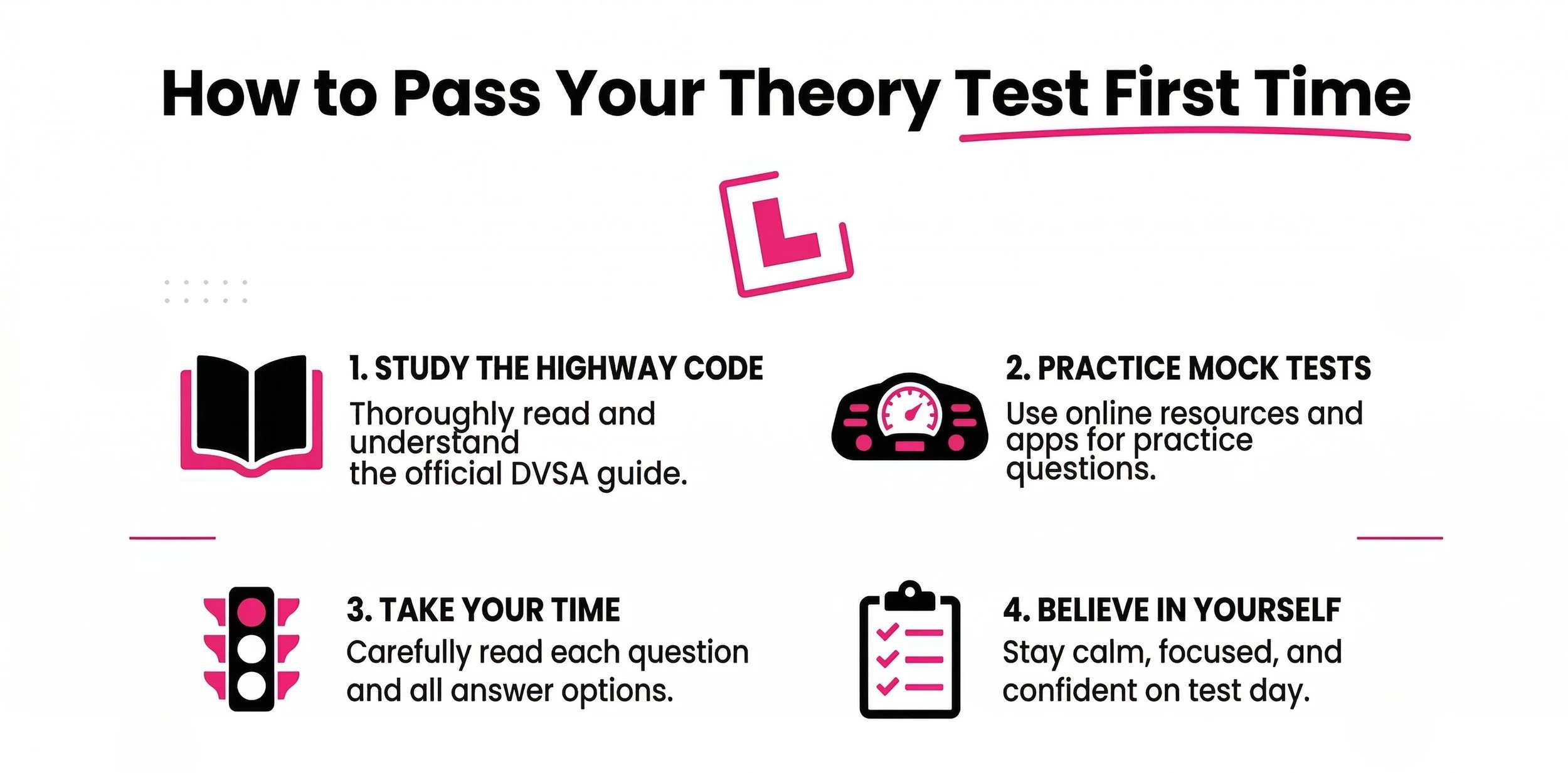
Passing your theory test is one of the first big milestones on your driving journey, and it's completely achievable with the right preparation. However, I'll be honest with you, it's not something you can leave until the night before! Only around 45% of candidates pass first time, which means a little focused preparation really does go a long way.
Here's everything you need to know about what the test involves and how to give yourself the best possible chance of passing first time.
What does the theory test actually involve?
The theory test is made up of two different sections, both completed on the same day. The first is 50 multiple-choice questions, and the second is a video-based hazard perception test. You must pass both parts — if you fail one, you'll need to retake the whole test on another occasion.
The multiple choice section
You have 57 minutes to answer 50 questions, and you'll need at least 43 out of 50 to pass. Five of those questions are based on a short case study — a scenario about a real-life driving situation, followed by a handful of questions about it. You can review your answers before submitting, and there's an optional 15-minute practice session at the start so you can get comfortable with the computer before the real thing begins.
The hazard perception section
After the multiple choice, you'll move on to the hazard perception test — 14 video clips filmed from a driver's perspective. You'll need to score at least 44 out of a possible 75 points to pass this section. The idea is to click as soon as you spot a developing hazard — the earlier you respond to a genuine hazard, the more points you score. One clip will contain two hazards, so don't stop watching after you spot the first one!
A word of warning here: don't click continuously or in a pattern, as this will trigger a warning and you'll score zero for that clip. React naturally, as you would if you were actually driving.
What's new for 2026?
The DVSA has been updating the theory test to better reflect modern driving, so it's important you're revising with up-to-date materials. Changes being rolled out include new questions on electric vehicle safety and eco-driving, first aid and CPR knowledge, and video-based scenario questions where you'll watch a short driving clip and answer questions about what you observed. The hazard perception clips have also been updated to include more challenging conditions like night driving, rain, and fog.
If you're using an older revision book or app, it's worth checking that it covers this new content.
How to prepare — what actually works
Read the Highway Code
This is the foundation of everything. All the multiple choice questions come from the Highway Code, so reading it at least once properly, not just skimming it, makes a real difference. It's free on GOV.UK.
Use the official DVSA revision app
The official DVSA Theory Test Kit app (available on iOS and Android, around £4.99) gives you access to all the practice questions and hazard perception clips in the same format as the real test. It's the closest thing to the actual exam and well worth the small investment.
Take mock tests regularly
Don't just read through questions — test yourself under timed conditions. Aim to consistently score above the pass mark before you book your real test. This builds confidence and helps identify any topic areas where you need a bit more work.
Don't neglect hazard perception
This is where a lot of unprepared candidates come unstuck. It feels intuitive, but it does take practice to train your eyes to spot developing hazards early. Make sure you're practising with video clips, not just reading about it.
Pace yourself
You have 57 minutes for 50 questions, so there's no need to rush. Take your time, re-read questions carefully, and trust your preparation.
Booking your theory test
The theory test costs £23 and must be booked through the official GOV.UK website. GOV.UK You'll need your provisional driving licence number to book. Be cautious of third-party booking websites that may charge additional fees — always use the official government service.
Your theory test pass certificate is valid for two years, so once you've passed, make sure you're working towards your practical test within that window. If it expires, you'll need to sit the theory test again before you can book a practical.
A note on nerves
It's completely normal to feel nervous before your theory test — I hear it from my pupils all the time! But the best antidote to nerves is preparation. When you've been consistently passing mock tests, you walk into the test centre knowing you're ready. Trust the work you've put in.
If you're learning to drive in Chelmsford or Brentwood and have questions about preparing for your theory test, I'm always happy to chat through it during your lessons. Getting your theory sorted is a great early confidence boost — and it means you can focus fully on the road when you're with me.
Good luck! You've got this!